Graphing a plot

Austin Kleon’s Show Your Work! – a two-day read for me – has something useful for writers aside from its inspirational self-help advice. The section titled, “Structure is Everything,” includes nine different descriptions or graphs of story structures. They range from abstract models to Kurt Vonnegut’s graphs of three specific stories.

While I’m loathe to blindly follow a formula, it is useful to compare the narrative I’m writing to successful ones and to consider revisions as a result. Luckily, Kafka didn’t follow a standard, fairy tale approach in writing “Metamorphosis,” as Vonnegut’s hilarious (to me) graph makes clear.

Show my work?

For me, one of the oddities of producing a book is that getting it published and read causes at least as much anxiety as writing it does. As part of my continuing effort to figure out how to build a “platform,” I’ve started reading Show Your Work!, by Austin Kleon.

It’s short, so in one day I’ve read about 40 percent of it. That’s far enough to see that the title means that we should show our working selves – sharing aspects of our process in the hope of accruing not only followers but inspiration from others. Then, presumably, we’ll be able to ‘show our (finished) work’ to more people and with greater success.

Generally I like the gist of Kleon’s advice. One of my delights as an ethnographer was summarizing my research to the people whose lives I was trying to understand and hearing new complexities from them – likewise with professors and then colleagues. I’m not sure that I built much of a platform, but others’ ideas have strengthened my work.

Nonetheless, one of these days, I’ll write a caveat to this idea, based on my experience with writers’ groups. I might rewrite Kleon’s title as Show Your Work (but not to trolls).

Washington Writers Conference 2015

I recently attended the Washington Writers Conference. Before registering I sought reviews or personal accounts of attendees and couldn’t find any, so perhaps this report will help anyone considering attending in future years. In short, I’m glad I went once, but that was enough. Continue reading →

Spring Break in Mazatlán? Read this!

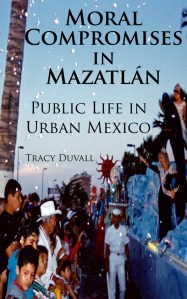
Going to Mazatlán for Spring Break? If you’re looking for something not-so-light to read while lounging on the beach, you might consider Moral Compromises in Mazatlán: Public Life in Urban Mexico. It provides an academic analysis of life in Mazatlán based on years of ethnographic research there (ending around 2000). While many things have changed since I finished my anthropological investigations, many of the basic patterns I found remain unchanged. Search the text for “parachuteros,” and you’ll learn something interesting about those guys working the beach.

My new book: Moral Compromises in Mazatlán!

coverAt long last, I’ve published a highly reworked version of my PhD dissertation as a book: Moral Compromises in Mazatlán: Public Life in Urban Mexico. It’s an ethnography of Mazatlan, a coastal city in Mexico, based on research that I conducted from 1991 to 2000.  And it has color photos.

Here’s the blurb:

This book is a wide-ranging ethnography of Mazatlán, a mid-sized city and tourist destination on Mexico’s Pacific coast. The text focuses on diverse aspects of Mazatlecos’ lives, especially in public realms. Readers will finish with an analytical understanding of life in Mazatlán and a good practical sense of it, too – knowledge that should apply, in some degree, to many other parts of Mexico and, indeed, to much of Spanish-speaking America.

Rife with concrete observations of local life – including beaches, bakeries, beauty contests, Carnaval, and corruption – this monograph demonstrates that Mazatlecos expected each other to mix contradictory moral frameworks. The author compares different classes, neighborhoods, and social domains to develop a sophisticated analysis of everyday life in this urban setting. The main themes are how people in Mazatlán define and combine modernity and tradition, the character of various social distinctions among Mazatlecos, and the relationship between individual experience and institutionalized expectations.

This volume is not a tourist guide or traveler’s tale. It addresses several types of university-level reader: tourists and foreign residents who want to learn more about Mazatlán; Mexicans who value different perspectives on their lives; academics interested in this region or in a holistic treatment of diverse issues, including space, modernity, history, gender, sexuality, politics, globalization, organization, diversity, hierarchy, identity, and discourse; and anthropologists-in-training looking for a relatively transparent account of fieldwork.